
Dental Bridges in Stamford, CT
Fixed porcelain bridges that replace missing teeth by anchoring to healthy neighbors — a time-tested, efficient tooth replacement option.

1. X-ray reveals severe decay, unfortunately leaving the tooth too damaged to be saved.

2. Severe decay developed beneath the existing crown, compromising the tooth's structure

3. Black areas show recurrent decay, emphasizing the need for regular dental check-ups.
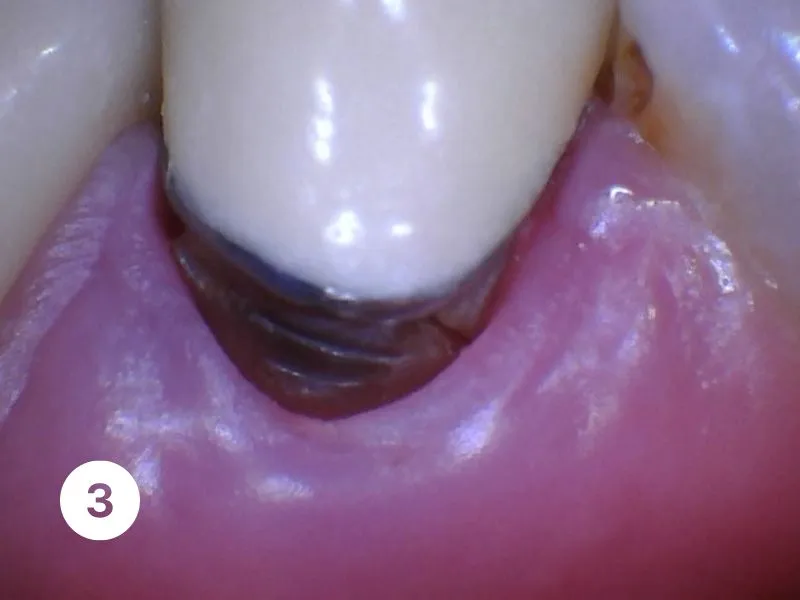
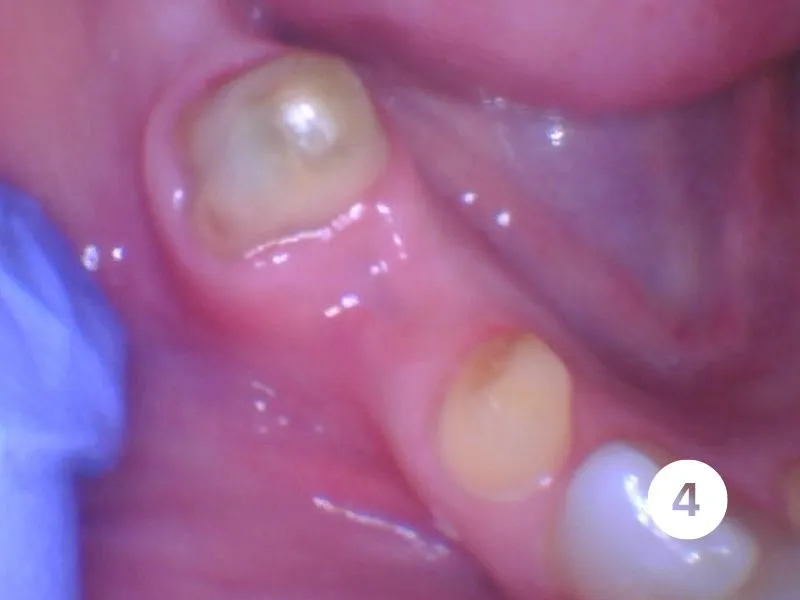
4. The area of the missing teeth has been prepped and is now ready for cementing.
5. The bridge is tested in a clay mold of the patient's smile before being placed in the mouth.

6. The bridge fits perfectly and is cemented, giving the patient a beautiful, functional smile.

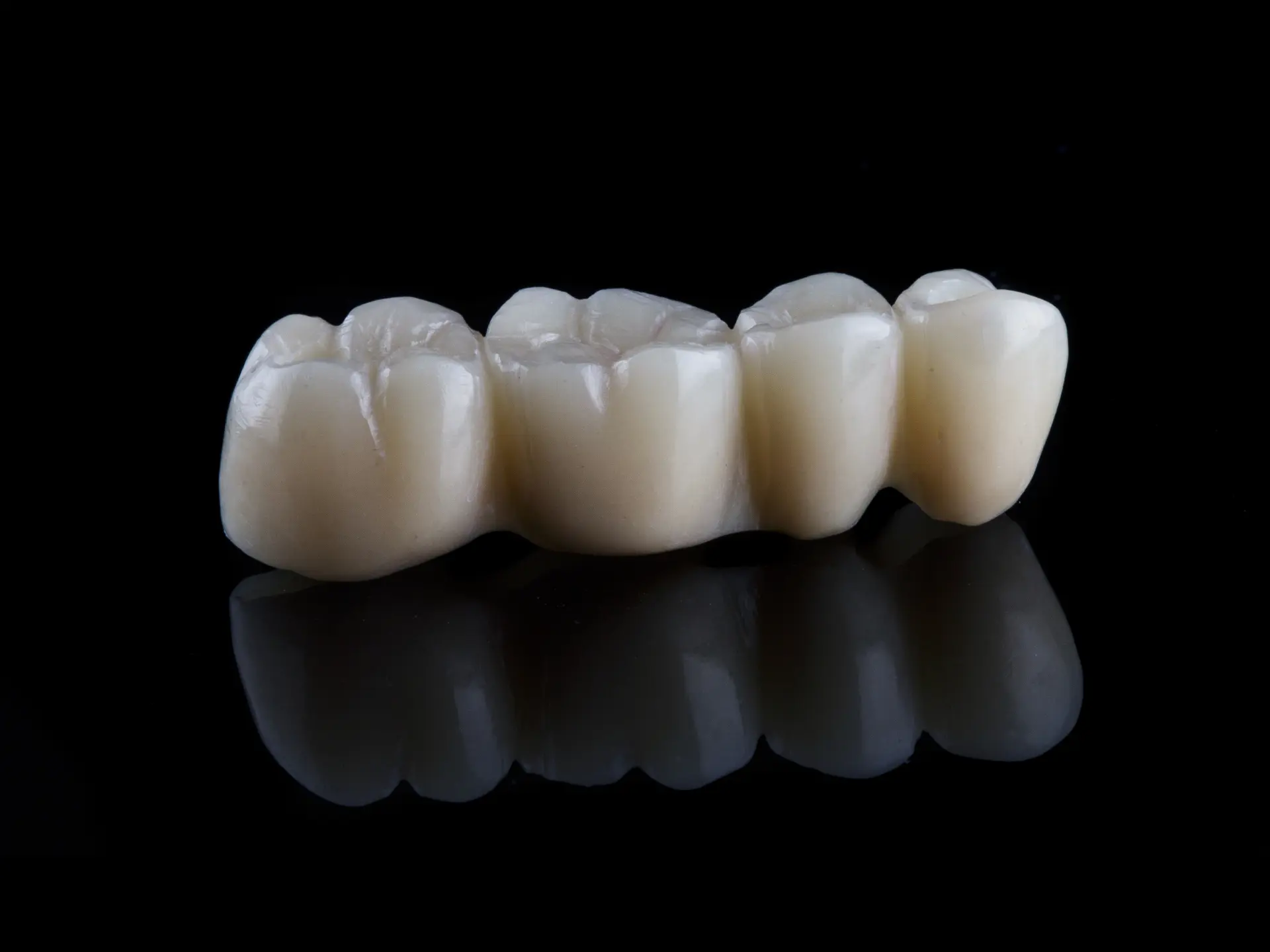
A dental bridge is a fixed restoration that replaces one or more missing teeth by anchoring artificial teeth to the natural teeth on either side of the gap. The anchor teeth (called abutments) are reshaped and crowned, and the replacement teeth (pontics) sit between them, filling the space with a seamless set of connected crowns. At Dental Care of Stamford, we create bridges from all-ceramic materials like zirconia or porcelain-fused-to-zirconia that look and function like natural teeth. Bridges are a time-tested option for patients who have lost one or a few teeth, and they are typically completed in two to three appointments over two to three weeks. Modern bridges commonly last 15 to 25 years with good care.
Types of Dental Bridges
- Traditional bridge — The most common type, with two crowns on either side of the gap supporting one or more pontics. Used when healthy teeth exist on both sides of the missing tooth space.
- Cantilever bridge — A bridge anchored to only one side of the gap, used in specific situations where a tooth exists on only one side. Less common because of force distribution concerns.
- Maryland bridge — A conservative bridge that uses thin wings bonded to the back of adjacent teeth rather than full crowns. Ideal for replacing front teeth when minimal tooth preparation is preferred.
- Implant-supported bridge — Anchored to dental implants rather than natural teeth. Used when multiple teeth are missing or when adjacent teeth are not suitable as abutments.
Benefits of Dental Bridges
- Restore chewing function — Fill gaps that make chewing uncomfortable or inefficient.
- Preserve adjacent tooth position — Prevent neighboring teeth from drifting into the gap over time.
- Restore smile appearance — Replace missing front teeth for cosmetic and functional improvement.
- Maintain facial structure — Prevent the facial collapse that can occur with untreated tooth loss.
- Fixed and stable — Unlike removable partial dentures, bridges stay in place 24/7 and feel like natural teeth.
- Faster than implants — Complete a bridge in two to three weeks versus four to six months for a single implant.
The Dental Bridge Process
- Exam and treatment planning — We evaluate the adjacent teeth (abutments), confirm they are healthy enough to support a bridge, and design the bridge digitally.
- Tooth preparation — Under local anesthesia, the two abutment teeth are reshaped to make room for the bridge crowns.
- Digital impressions — Precise digital scans capture the prepared teeth and surrounding anatomy without goopy trays.
- Temporary bridge — A custom temporary bridge protects the prepared teeth while your permanent bridge is fabricated.
- Lab fabrication — Your custom bridge is crafted by our dental lab partner over two to three weeks using high-strength ceramics.
- Final fitting and bonding — The permanent bridge is checked for fit, bite, and color, then cemented in place.
Dental Bridge Cost in Stamford
A traditional three-unit bridge (two abutment crowns plus one pontic) at Dental Care of Stamford typically ranges from $3,500 to $5,500, depending on material and location. Maryland bridges are typically less expensive. Implant-supported bridges cost more because of the implant components. Most PPO insurance plans cover bridges at 50 percent for restorative purposes. Financing is available through our in-house options for larger cases.
Bridges vs. Dental Implants
A dental implant replaces a missing tooth independently, without involving neighboring teeth. Bridges anchor to adjacent teeth, which requires reshaping and crowning those teeth. Implants cost more upfront and take longer to complete (four to six months) but preserve jawbone and do not compromise adjacent teeth. Bridges are faster and less expensive initially but place long-term structural load on neighboring teeth. We discuss both options honestly so you can decide what fits your situation best.
Bridges vs. Partial Dentures
A partial denture is a removable appliance that fills gaps without permanent placement. Bridges are fixed (non-removable) and feel more like natural teeth, but they require reshaping of adjacent teeth. Partial dentures are less invasive and more affordable for patients missing multiple teeth, but they are removable and can feel bulky compared to a bridge. The right choice depends on how many teeth are missing, the health of surrounding teeth, and personal preference.
Who Is a Good Candidate?
Dental bridges work well for patients who:
- Are missing one or two teeth with healthy teeth on both sides
- Have adequate bone support around the abutment teeth
- Prefer fixed rather than removable tooth replacement
- Want faster treatment than implant placement allows
- Have adjacent teeth that already need crowns for other reasons
Who Is NOT a Good Candidate?
Bridges are not appropriate for every situation. Alternative options may be better for:
- Patients missing multiple non-adjacent teeth
- Patients whose abutment teeth are heavily decayed or structurally compromised
- Patients with active gum disease or significant bone loss
- Patients who want to avoid reshaping healthy adjacent teeth (implants preferred)
- Patients with teeth grinding that would overload a bridge
Caring for Your Bridge
Bridges require slightly more care than natural teeth because plaque can accumulate under the pontic where the replacement tooth meets the gumline. Daily cleaning with a floss threader, water flosser, or special bridge floss is essential. Professional cleanings every six months protect both the bridge and the abutment teeth. With good care, bridges commonly last 15 to 25 years or longer.
The In-House Advantage
Bridge placement requires coordinated expertise between preparation, design, lab fabrication, and final fitting. Our restorative team works seamlessly with our lab and with our cosmetic and implant specialists when bridges are part of a larger treatment plan.
Serving Stamford and Fairfield County
Our bridge patients come from across Stamford (06901, 06902, 06903, 06905, 06907) and from Greenwich, Darien, New Canaan, Norwalk, Westport, and nearby Westchester County, NY.
Schedule Your Dental Bridge Consultation
Call (203) 324-6171 to schedule a consultation. We will evaluate your specific case and review all tooth replacement options honestly before recommending a plan.
Frequently Asked Questions
How much does a dental bridge cost in Stamford?
A traditional three-unit bridge at Dental Care of Stamford typically costs $3,500 to $5,500 depending on material and tooth location. Maryland bridges are typically less expensive; implant-supported bridges cost more because of implant components. Most PPO plans cover bridges at 50 percent for restorative purposes.
How long do dental bridges last?
With proper care, modern dental bridges last 15 to 25 years or longer. Longevity depends on the health of the abutment teeth, oral hygiene, bite forces, and avoidance of excessive chewing forces. Routine professional cleanings and daily floss threader use are essential for bridge longevity.
Is getting a bridge painful?
No. Bridge preparation is performed under local anesthesia, so the procedure is painless. Mild sensitivity to cold for a few days after preparation is normal. Once the permanent bridge is cemented, most patients report that it feels like natural teeth and requires no unusual sensation management.
Can I get a bridge if I've had gum disease?
Yes, after gum disease is stabilized. Active periodontal disease must be treated first because inflamed, unhealthy gum tissue compromises bridge longevity. Once gums are healthy and stable, bridges can be placed successfully. Ongoing periodontal maintenance is especially important for patients with gum disease history.
What's the difference between a bridge and an implant?
A bridge anchors artificial teeth to the crowns of adjacent natural teeth. An implant replaces the missing tooth independently by placing a titanium post in the jawbone. Bridges are faster and less expensive upfront; implants preserve adjacent teeth and typically last longer. We explain tradeoffs clearly during consultation.
We are out-of-network with most PPO dental plans but still accept and file claims with all major carriers including Delta Dental, Aetna, Cigna, MetLife, Guardian, and more. Most PPO patients receive significant coverage at our office, and we verify specific benefits before every new patient visit.
Restore Your Smile with a Dental Bridge in Stamford
Call (203) 324-6171 or visit us at 1500 Summer Street, Stamford, CT 06905. Open 7 days a week with same-day and emergency appointments available.