Dental Implants in Stamford, CT
Permanent tooth replacement from an in-house implant team — no outside referrals, no split appointments, and financing designed around your budget.




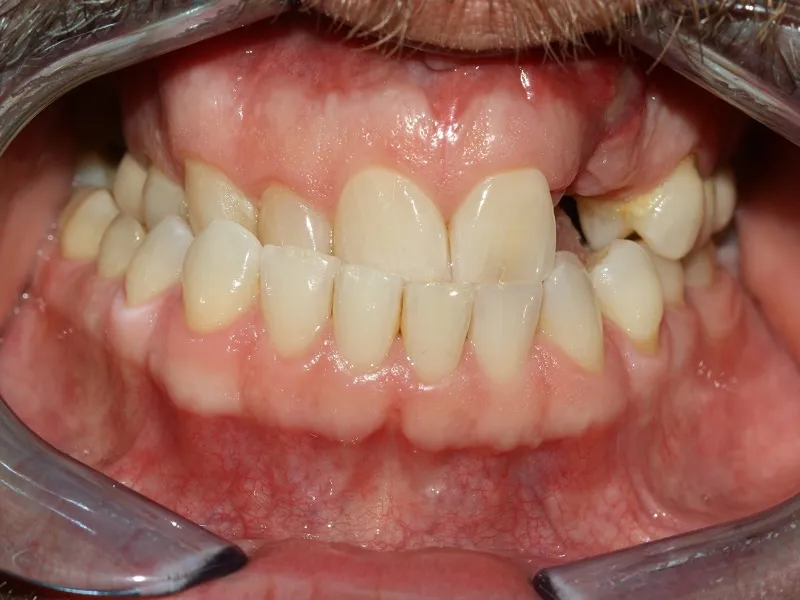
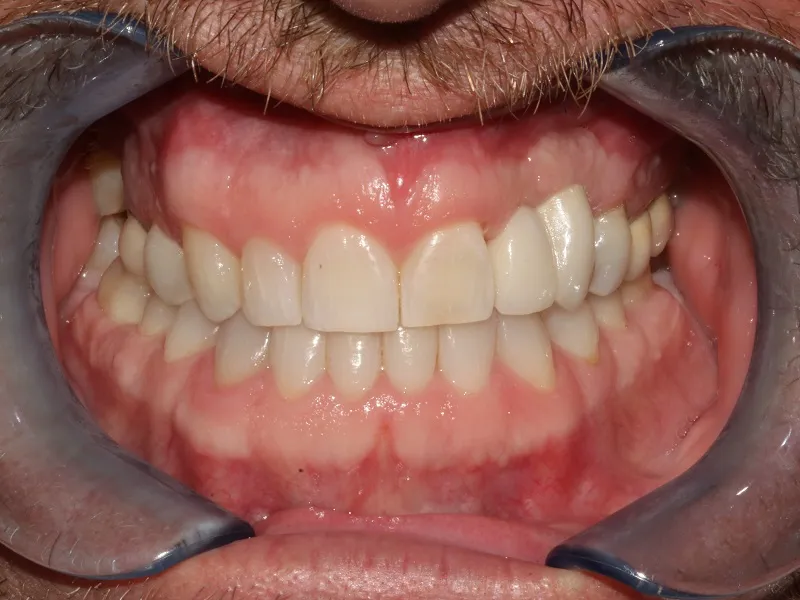
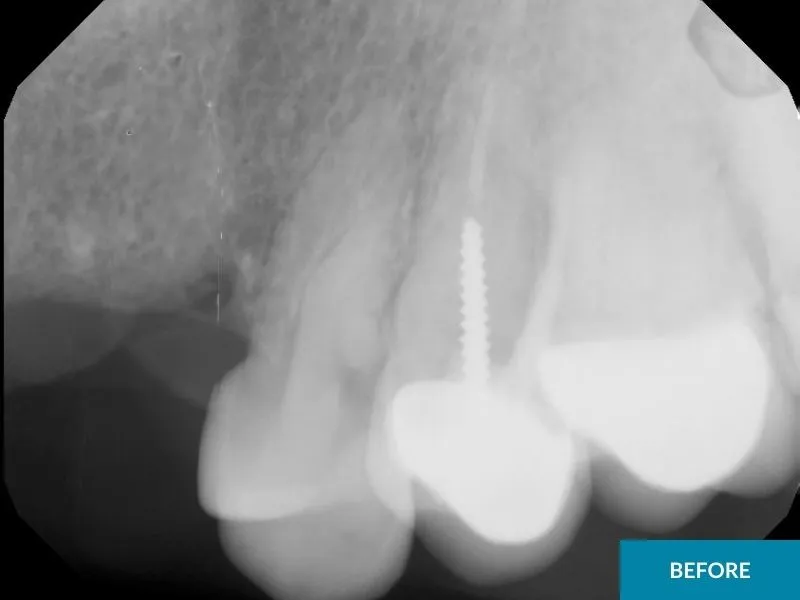
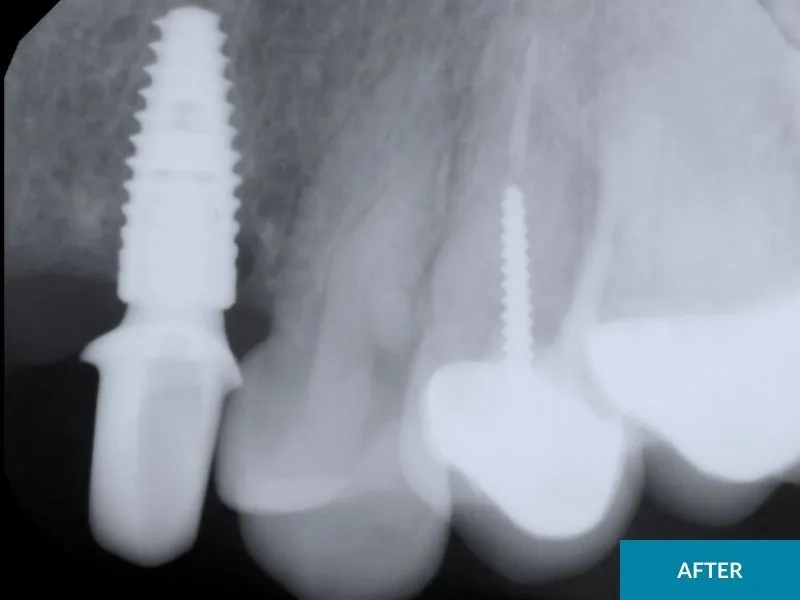
A dental implant is a small, biocompatible titanium post that is surgically placed into your jawbone to replace the root of a missing tooth. Once the implant integrates with the bone — a process called osseointegration — a custom-made porcelain crown, bridge, or denture is attached on top, restoring full chewing function and a natural-looking smile. At Dental Care of Stamford, every stage of your implant treatment is performed on-site by our in-house oral surgery and restorative team, which means faster timelines, coordinated care, and no need to be referred to an outside specialist. Our Stamford implant patients include adults replacing a single missing tooth, patients restoring multiple teeth, and those transitioning from failing dentures to stable, implant-supported solutions. Whether you need one implant or a full arch, we build a plan that fits your clinical needs, your timeline, and your budget.
Benefits of Dental Implants
Dental implants are the only tooth replacement option that restores both the visible crown and the root structure beneath the gumline. That distinction matters more than most patients realize — it is the reason implants outperform every other tooth replacement in longevity, function, and long-term oral health.
- Permanent stability — Implants fuse with your jawbone, so they never slip, click, or shift the way traditional dentures can.
- Preserves jawbone — The implant post stimulates the bone, preventing the bone loss and facial collapse that typically follow tooth loss.
- Protects adjacent teeth — Unlike traditional bridges, implants do not require grinding down healthy neighboring teeth.
- Full chewing power — Patients regain roughly 90 to 100 percent of natural bite force, compared to about 20 to 30 percent with conventional dentures.
- Natural appearance — Porcelain crowns are color-matched to your surrounding teeth and shaped to your natural smile.
- Decades-long lifespan — With proper care, implant posts commonly last 25 years or more, and many remain functional for life.
The Dental Implant Process, Step by Step
Because Dental Care of Stamford handles every phase of implant treatment in-house, your full timeline is coordinated by one team. Here is what you can expect from first visit to final crown.
- Consultation and 3D imaging — We review your medical and dental history, perform a clinical exam, and capture 3D cone-beam CT scans to evaluate bone volume, nerve position, and sinus anatomy. You leave this visit with a clear treatment plan and a written cost estimate.
- Preparatory treatment (if needed) — Some patients require a tooth extraction, bone graft, or sinus lift before implant placement. When these are necessary, we complete them at our Summer Street office rather than referring out.
- Implant placement surgery — A single implant placement typically takes 60 to 90 minutes under local anesthesia, with sedation available for anxious patients. The titanium post is positioned precisely using surgical guides created from your 3D scan.
- Osseointegration (healing) — Over the next three to six months, the implant fuses with your jawbone. You wear a temporary crown or continue normal activities during this phase, with periodic checkups to confirm healing.
- Abutment and impressions — Once integration is confirmed, a small connector called an abutment is attached, and digital impressions are taken for your final restoration.
- Final restoration placement — Your custom porcelain crown, bridge, or implant-supported denture is placed, adjusted for bite, and polished. You walk out with a fully restored, natural-looking smile.
Dental Implant Timeline: What to Expect
Most Stamford patients complete a single-tooth implant in four to six months from consultation to final crown, though timelines vary based on bone quality, preparatory procedures, and healing response. Here is a typical breakdown:
- Weeks 1–2: Consultation, imaging, treatment planning, and cost review.
- Weeks 3–6: Any preparatory work, including extractions, bone grafting, or sinus lifts.
- Month 2 or 3: Implant post placement (typically one appointment of 60 to 90 minutes).
- Months 3–6: Osseointegration and healing, with check-in appointments.
- Month 5 or 6: Abutment placement, impressions, and final crown delivery.
For patients who qualify, same-day or immediate-load implants can compress this timeline significantly. We will tell you during your consultation whether you are a candidate for accelerated treatment.
Dental Implant Cost Factors in Stamford, CT
Dental implant costs vary based on several clinical and procedural factors. Any Stamford dentist who quotes a single price without examining you is not giving you accurate information. During your free consultation, we provide a written estimate based on your specific case. The factors that influence your cost include:
- Number of implants — A single implant replaces one tooth. Multiple implants, bridges supported by two implants, or full-arch restorations (such as All-on-4) change the scope and cost.
- Preparatory procedures — Bone grafts, sinus lifts, or tooth extractions add to the total treatment cost but are often necessary for long-term success.
- Type of restoration — Porcelain crowns, zirconia bridges, and implant-supported dentures each have different material and lab costs.
- Imaging and surgical guides — 3D CT imaging and computer-guided placement improve precision and predictability but are part of the overall investment.
- Sedation preferences — Oral conscious sedation and IV sedation add to treatment cost for patients who prefer them.
We accept all major PPO insurance plans, offer CareCredit and Cherry financing for implant cases, and include an in-house membership plan that reduces the cost of preparatory care. For a full breakdown of payment options, visit our financing and insurance page.
Risks and Limitations of Dental Implants
Dental implants have one of the highest success rates in modern dentistry — published rates typically range from 95 to 98 percent over ten years. However, no surgical procedure is without risk, and we believe patients deserve a complete picture before making a decision. Possible risks include:
- Infection at the implant site — Rare with proper sterile technique and post-operative care, but possible. Managed with antibiotics if it occurs.
- Implant failure to integrate — In a small percentage of cases (typically under 5 percent), the implant does not fuse with the bone and must be removed and replaced after healing.
- Nerve or sinus involvement — In the lower jaw, there is a small risk of nerve irritation; in the upper jaw, sinus proximity. Our 3D imaging and surgical guides are specifically designed to eliminate these risks before surgery.
- Peri-implantitis — A gum infection around an established implant, usually linked to poor oral hygiene or smoking. Preventable with routine cleanings and good home care.
- Longer treatment timeline — Implants take months to complete, unlike same-day dentures or bridges.
Who Is a Good Candidate for Dental Implants?
Most adults missing one or more teeth are candidates for dental implants. Ideal candidates generally share the following traits:
- Adequate jawbone density to support an implant (or willingness to undergo bone grafting if needed).
- Healthy gums without active periodontal disease.
- Good overall health and a controlled medical history.
- Non-smokers, or patients willing to stop smoking during treatment and healing.
- Commitment to good oral hygiene and routine dental visits.
Who Is NOT a Good Candidate for Dental Implants?
Implants are not the right answer for everyone. Patients for whom we may recommend an alternative treatment include:
- Heavy smokers unwilling to reduce or pause tobacco use during healing, given significantly higher failure rates.
- Patients with uncontrolled diabetes, certain autoimmune conditions, or those undergoing radiation therapy to the jaw.
- Patients on high-dose bisphosphonates (commonly used for osteoporosis), where jaw healing complications are more likely.
- Children and adolescents whose jawbones are still developing.
- Patients with severe bone loss who are unwilling to pursue bone grafting as a first step.
In these cases, we often recommend a different tooth replacement path. We discuss all options honestly during your consultation.
Dental Implants vs. Dental Bridges
The most common alternative to a single-tooth implant is a traditional dental bridge. Both restore a missing tooth, but they work very differently. A dental bridge spans the gap by anchoring a false tooth to the two healthy teeth on either side, which requires those teeth to be reshaped and crowned. A dental implant replaces the missing tooth independently, without involving neighboring teeth.
Bridges are faster to complete (typically two to three weeks) and have a lower upfront cost, making them appropriate for certain situations. Implants cost more initially and take longer, but they preserve neighboring teeth, stimulate the jawbone, and typically last two to three times longer — often offsetting the upfront difference over the life of the restoration.
Alternatives to Dental Implants
If dental implants are not the right fit for your situation, we offer several other tooth replacement solutions at our Stamford office:
Traditional dentures — Removable full or partial dentures replace missing teeth at a lower initial cost, with no surgery required.
Implant overdentures — A hybrid option that combines the stability of implants with the affordability of dentures. Our implant overdenture treatment uses two to four implants to anchor a removable denture, eliminating slippage without the cost of individual implants for every tooth.
Tooth-supported bridges — Bridges remain a valid option when adjacent teeth already need crowns or when bone grafting is not feasible.
Extraction planning — For patients with a failing tooth, our oral surgery team handles tooth extractions and can immediately plan for implant placement, bone preservation, and your full long-term restoration — all in one coordinated plan.
Why Choose Dental Care of Stamford for Your Implants
Dental implant treatment is one of the most demanding procedures in general dentistry because success depends on precise surgical placement, healthy bone, and a well-designed final restoration. Most Stamford practices refer patients to outside oral surgeons for the placement phase and then restore the crown themselves — which means two offices, two billing systems, and a disjointed timeline. At Dental Care of Stamford, your entire implant journey happens at our Summer Street office. Our oral surgery team, restorative dentists, and cosmetic dentists collaborate on every case, and you see familiar faces from consultation to final crown. Meet the doctors who will be part of your treatment team.
For patients with dental anxiety, we offer full sedation options including nitrous oxide, oral conscious sedation, and IV sedation, administered and monitored by trained specialists.
Serving Stamford and Greater Fairfield County
Our office is located at 1500 Summer Street in Stamford, easily accessible from I-95, the Merritt Parkway, and the Stamford Transportation Center. We treat implant patients from across Stamford zip codes 06901, 06902, 06903, 06905, and 06907, as well as Greenwich, Darien, New Canaan, Norwalk, Westport, and Westchester County, NY. Many of our implant patients travel from across Fairfield County specifically because they want in-house surgical and restorative care under one roof.
Schedule Your Free Dental Implant Consultation
Ready to explore whether dental implants are right for you? Call (203) 324-6171 to schedule a free consultation. We will review your options, walk you through expected costs, and answer every question before you commit to anything. Same-day consultations are often available.
Frequently Asked Questions
How much do dental implants cost in Stamford, CT?
A single dental implant in Stamford typically ranges from $3,500 to $6,000 including the post, abutment, and final crown, depending on complexity and whether bone grafting is needed. Full-arch implant solutions like All-on-4 range higher. We provide a written estimate at your free consultation and offer CareCredit and Cherry financing.
Are dental implants safe?
Yes. Dental implants have one of the highest success rates in modern dentistry, commonly cited at 95 to 98 percent over ten years. Titanium is biocompatible and has been used in medical and dental implants for more than five decades. Our 3D imaging and computer-guided surgical planning further reduce the already small risks.
Am I a candidate for dental implants?
Most healthy adults with one or more missing teeth are candidates. Good candidates have adequate jawbone, healthy gums, and are not heavy smokers. Patients with bone loss can often still qualify after a bone graft. The only way to know for sure is a consultation with 3D imaging, which we offer free of charge.
How long does the dental implant process take?
From consultation to final crown, a single implant typically takes four to six months, with most of that time being quiet healing between appointments. Patients needing bone grafting or sinus lifts may see timelines of six to nine months. Same-day or immediate-load implants are available for qualifying patients and compress this significantly.
Do dental implants hurt?
Most patients report the implant placement itself as less uncomfortable than they expected — comparable to a tooth extraction. The procedure is done under local anesthesia, with sedation available. Mild soreness for two to three days afterward is managed with over-the-counter pain medication. Healing during osseointegration is painless.
Are dental implants better than bridges or dentures?
Implants are generally the longest-lasting tooth replacement and the only option that preserves jawbone. Bridges cost less upfront but require reshaping healthy neighboring teeth. Dentures are the most affordable but offer lower chewing function. The best option depends on your clinical needs, timeline, and budget — we help you weigh all three.
Does insurance cover dental implants?
Most dental insurance plans cover a portion of implant treatment, though coverage varies widely by plan. We are out-of-network with most PPOs but submit claims directly on your behalf and verify your benefits before treatment begins. For patients without insurance, we offer an in-house membership plan and third-party financing.
We are out-of-network with most PPO dental plans but still accept and file claims with all major carriers including Delta Dental, Aetna, Cigna, MetLife, Guardian, and more. Most PPO patients receive significant coverage at our office, and we verify specific benefits before every new patient visit.
Restore Your Smile with Dental Implants in Stamford
Call (203) 324-6171 or visit 1500 Summer Street, Stamford, CT 06905 to schedule your free implant consultation. Open 7 days a week with same-day and emergency appointments available.